


The term “digital twin” has been at the forefront of architectural innovation in recent years. The ability to construct a live computer model of a real physical object (or a building in the context of this article) that uses real-time sensor data to mirror, track and study its real-world partner has been a gamechanger. What happens though when this new technology is applied to existing, more complicated cases, where things are not so black and white?
Imagine a digital twin that attempts to simulate Athens. Where would it draw its data from? Street maps, registered building plans, official land records, forest maps? This data would create an accurate, albeit static, model of the city. However, Athens is very much shaped by informality, with its inhabitants remaking the city through changing uses, improvised interventions, and everyday negotiations that rarely appear in official records. This then raises the question: if a twin cannot understand Athens fully, what parts of it does it understand?


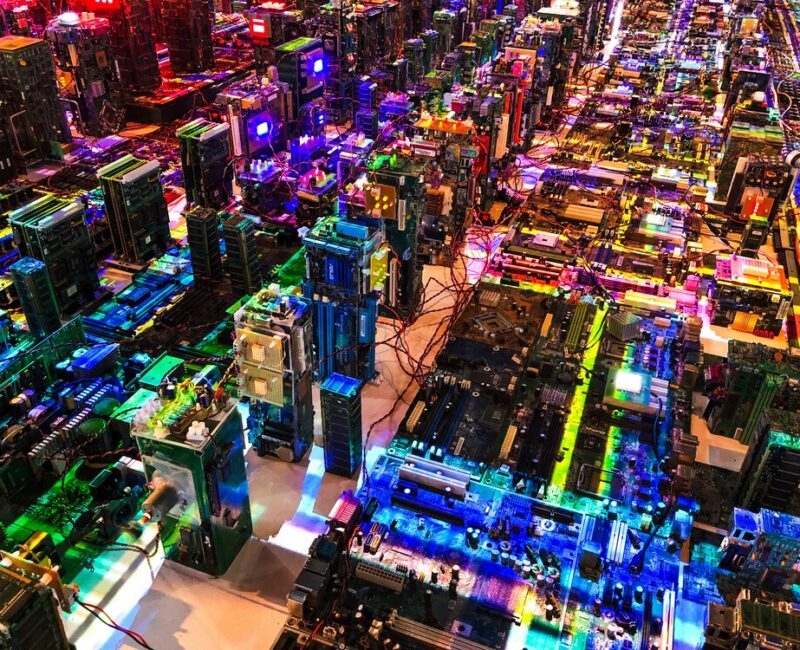
“Twinning” a city does not mean creating its copy. Digital twins are created by combining spatial models with live historical data, monitoring urban systems or predicting traffic, energy demand, flooding and heat. In short, a twin is not – and cannot be – a faithful copy; it is a selective representation of a city / space / object constructed for particular purposes. That is why creating a digital twin for Athens poses such a great challenge. The city is comprised of polykatoikias that constantly change use, ownership that is fragmented, boundaries between domestic, commercial, and public space that are weak, and conditions of tourism, migration, and economic volatility that vary greatly. With so much porosity, it is difficult to determine where the official city ends and the lived city begins – or which of the two the digital twin is expected to represent. The point is not that Athens is uniquely chaotic, but that it makes the hidden assumptions of digital urbanism unusually visible.
Case studies like Athens urge us to rethink what urban modelling is for. This chaotic complexity could be better understood by combining sensor data with resident testimony. Communities could annotate unofficial information, which could then be utilised alongside official records. Digital twin-making could become less of a control room and more of a civic forum: a space where different versions of the city can coexist and be contested. Athens shows that cities are not only collections of objects and flows, but relationships shaped through constant negotiation. The question, then, is not whether Athens can become legible to the digital twin, but whether the twin can respond to the urban intelligence Athens already contains.


